The Apostles' Creed
Tracing the simple, ancient confession that gives shape to Christian faith — and showing where each phrase finds its root in Scripture.

Hans Malan's study guide invites Christians of every background to read the Bible attentively, to confess the faith honestly, and to live in joyful expectancy of the return of our Lord Jesus Christ.

Hans Malan · Potchefstroom, South Africa
Hans Malan writes from a deep love of Scripture and the Reformed Confessions. His desire is not to win arguments but to help believers ground their faith more firmly in what God himself has revealed.
He is married to Lien Smit. Together they have a daughter and three sons, and six grandchildren — all now grown. From his home in South Africa, Hans has spent years drawing fellow Christians into careful, prayerful conversation about the great promises of the gospel.
This study guide is the fruit of that quiet labour: an invitation to read the Bible with fresh attentiveness, to consider the wisdom carried in the Church's ancient confessions, and to receive the comfort Scripture gives concerning the return of Christ.
Professor of Psychology, Fort Hare University · Registered Counselling Psychologist
"Customarily, when considering Biblical prophecies concerning the end of time, you could expect the question 'Will you be there?' However, the question from which this work proceeds becomes 'Where will you be?'"
"One of the most impressive aspects of Malan's guide is the way it encourages us to delve deeper into the Scriptures. It provides clarity on issues that often lead to confusion and enables readers to build a solid foundation for their faith."
"In a world often characterised by uncertainty and confusion, this Bible study guide provides a stable rock of confidence in our faith."
"This study guide visits the rich abundance of Biblical testimony concerning the Day of Joy which Scripture promises us — and which the return of Christ will reveal to believers of all time. Readers are invited to consider, in depth, the wealth of comfort, meaning and import presupposed by our confession that Christ will return to judge the living and the dead."
"Are you interested in questions such as: Where do the souls of deceased Christians go? Where will they be staying until Christ returns? And what will they be doing there? Where will Christ return to from heaven? Do you dread the prospect of the Judgment Day — or are you among the crowd at the right-hand side of God's throne, jubilantly welcoming him?"
"If these questions interest you, then you stand to benefit from this study, in the course of which you and I carefully consider these matters in the light of the Bible's revelation itself."
— Hans Malan, Potchefstroom
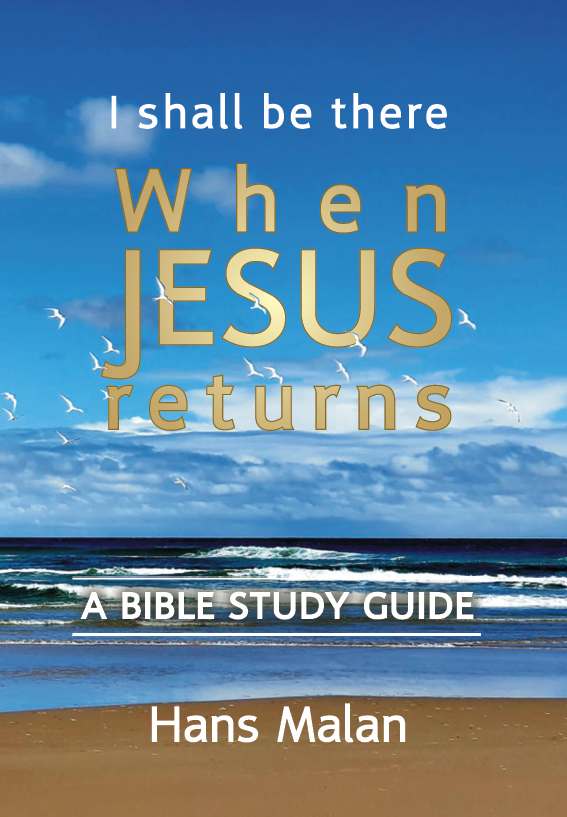
Each section is shaped around the questions believers actually ask, and is anchored in Scripture and the Church's historic confessions.
Tracing the simple, ancient confession that gives shape to Christian faith — and showing where each phrase finds its root in Scripture.
Why the Heidelberg Catechism and the Belgic Confession remain trustworthy companions to the believer's reading of the Bible.
Considering how Christ's bodily resurrection and ascension secure the believer's own hope of resurrection life.
What Scripture reveals about the manner, the timing, and the joyful purpose of the Lord's return.
Reading Matthew 25 with care — the gathered nations, the Shepherd-King, and the believer's confidence.
How joy, courage and perseverance grow from a settled assurance in the promises of God.
The Christian hope of Christ's return is not a fragile sentiment. It rests on the steady witness of the prophets, the apostles, and the risen Lord himself. From Luke's testimony that "everything written about me in the Law of Moses, the writings of the prophets, and the Psalms had to come true" (Luke 24:44), to Paul's careful teaching on the resurrection, Scripture speaks with one voice about the future God has prepared for those who love him.
One of the quiet joys of this study is watching the two Testaments speak to one another. The promises whispered to the patriarchs, the cries of the psalmists, and the burdens of the prophets all find their resolution in Christ. The same God who covenanted with Abraham is the God who raised Jesus — and who will raise his people on the last day.
The Church's confessions — the Apostles' Creed, the Heidelberg Catechism, the Belgic Confession — were never meant to replace Scripture. They were written to summarise it faithfully, so that Christians in every generation could speak the gospel clearly. They guard us from drift, give us shared language, and remind us that our faith is not invented but received.
"From there he will come again to judge the living and the dead." With these few words the Apostles' Creed gathers up an enormous body of biblical teaching. The One who ascended will return — bodily, visibly, gloriously. He will gather his people, judge the nations with perfect righteousness, and renew all things. This is not a threat to the believer; it is a promise.
Matthew 25 places before us a Shepherd-King who gathers the nations. The picture is sober, but it is also tender — the King knows his own. To stand at his right hand on that day is to hear words that every weary believer longs to hear: "Come, you that are blessed by my Father!"
Readiness for Christ's return is not produced by anxiety. It grows from a settled confidence in the gospel: that we belong, body and soul, in life and in death, to our faithful Saviour Jesus Christ. From that confidence flow the fruits the Church has always longed for — joy, courage, perseverance, and a quiet steadiness in the face of whatever the future may hold.
"When Jesus comes, you will surely be 'somewhere, in a place'… but the point of this Bible study guide is that you will also be 'somewhere', spiritually speaking. And where is that? You must ask and seek for yourself."
This is the invitation extended throughout the book: not to be told what to believe, but to be helped to see what God has said. To search the Scriptures. To weigh the confessions. And to find, at the end of it all, the joy of saying with the Church through the ages — "When Jesus returns, I shall be there."
This work could only come to fruition through the kindness of many — family members, friends, and members of the clergy who read through early versions of the manuscript and helped several involved issues to be discussed plainly and understandably.
The author offers particular thanks to Chris Venter, Maarten Kotze, Pieter and Wilna Pretorius, Marius Nel, Gerhard Mahne and Herrie van Rooy for their support and contributions; to Deon, Fanie and Elsa, Jennie, Jeanette and Naomi, who shared the excitement of each improved draft; and especially to Ansie du Plessis, an accomplished author of Biblical works, who was willing to read and re-read the draft of the Afrikaans original. Thanks also to Piet Roodt, Ferdi Kruger and Frik van Niekerk for their commentaries, and to Herster Lombard and the library staff at the School of Theology, North-West University, whose assistance made the work possible.
Unless otherwise indicated, all Scripture quotations are taken from the Good News Bible, Today's English Version (GNB), Third South African Edition 1993. Used with permission. Verses marked NLV are taken from the Parallel Bybel/Bible © 2013, Christelike Uitgewers Maatskappy, incorporating The Holy Bible, New International Version, Anglicised. Used with permission. All rights reserved worldwide.
Rather than asking 'Will you be there when Christ returns?', this guide asks 'Where will you be?' — inviting believers to consider where they stand spiritually in light of Christ's promised return.
The work is rooted in the Apostles' Creed, the Heidelberg Catechism and the Belgic Confession, while remaining accessible to non-Reformed Protestants, Methodists, and members of the Apostolic Faith Mission.
No. While the framework is Reformed, the study is presented to strengthen the faith of Christians from many traditions who wish to search the Scriptures carefully and respectfully.
It examines common misunderstandings about biblical prophecies of the end of time and provides Scriptural direction to anchor the believer's hope in what God himself has revealed.
If this study has stirred your reflection, we'd love to hear your questions and thoughts. Hans warmly welcomes thoughtful Bible study correspondence.
Reach out